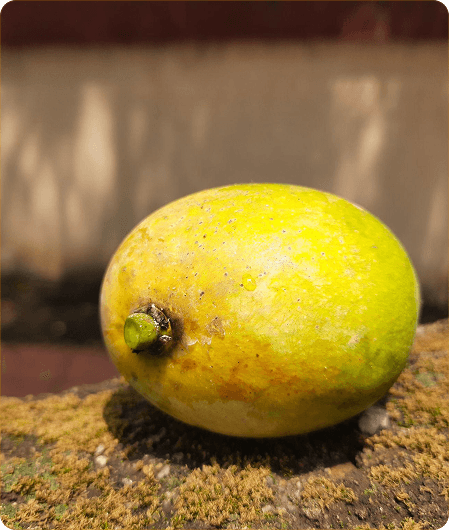
Mankurad tastes like honey, caramel, and a trace of cinnamon and allspice — layered flavours that don't exist in any other Indian mango. The flesh is smooth and custard-like, with more character near the stone than Alphonso's near-zero fibre. The aroma is extraordinarily powerful.

GOA · SEASON: JAN – MAY
Mankurad Mango — Goa's Most Prized Variety | The Mango Goans Call Their King
The Portuguese colonisers who arrived in 16th-century Goa looked at this quiet, golden mango and dismissed it entirely. They named it Malcorado — “poorly coloured” in Portuguese — and moved on. What they didn't understand was that the fruit they were mocking would, four centuries later, sell for ₹7,000 a dozen.
Over time, Konkani tongues softened the colonial insult into something warm: Mankurad aamo. The name Goans now say with the kind of familiarity usually reserved for family — and what Goans have always known: this is their king of mangoes.
It is also the first mango to arrive each season, sometimes appearing in Goan markets as early as January, while every other variety is still months away. The Portuguese called it ugly. Goans call it the king.
FLAVOUR PROFILE
What Makes Mankurad Different from Every Other Indian Mango
The Mankurad doesn't taste like a single thing. It tastes like several things happening at once — honey, caramel, a trace of cinnamon, a suggestion of allspice — none of them overpowering the others. The flesh dissolves on the tongue with a warmth that lingers. Goan mango lovers, when pushed to compare it to Alphonso, consistently say the same thing: Alphonso is rich; Mankurad is deep.
Key Characteristics
Skin colour
Uniform golden-yellow; orange-red blush on shoulders and cheeks. Does not develop Alphonso's dramatic red flush.
Weight
200–250g per fruit — compact but generously pulpy
Seed
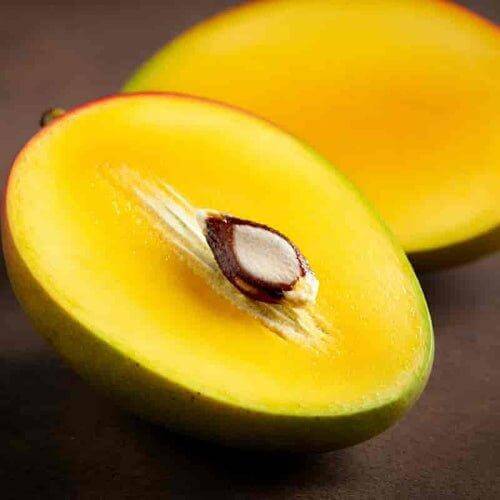
Remarkably small and flat — the smallest seed-to-fruit ratio of any major Indian variety. The result is an extraordinary pulp-to-seed yield.
Flesh texture
Smooth and custard-like through most of the fruit; moderately fibrous near the stone. This fibrous quality near the seed is considered a character trait — not a flaw — by Goan palates who prefer it to Alphonso's near-zero fibre.
Flesh colour
Deep golden-orange
Aroma
Exceptionally powerful. Goan elders say a single ripe Mankurad stored in the kitchen fills an entire house with its perfume. The aroma is detectable at the cut stalk end before the fruit is opened.
Sugar content
21% Brix — intensely sweet, with a cleaner finish than the complex acid-sweet balance of Alphonso
Taste profile
Honey and caramel primary, with layered notes of cinnamon and allspice
ORIGIN & HISTORY
The Mango That Survived a Portuguese Insult for 400 Years
The Mankurad's story begins in the 16th century, when Portuguese colonisers sailed into Goa and reorganised the land, the language, and even the fruit trees. The Portuguese preference was for vibrantly coloured fruit — the Alphonso's dramatic red-orange blush impressed them. The Mankurad's calm, even yellow skin did not. They called it Malcorado — bad-coloured — and planted more Alphonso.
The insult didn't stick. Goan families kept their Mankurad trees through colonial rule, through independence, through every mango trend that swept the rest of India. The variety never left Goa. It never needed to. While Alphonso was exported, branded, and turned into a national icon, the Mankurad stayed quietly at home — available mostly within Goa and a few neighbouring areas of coastal Maharashtra and Karnataka.
That quiet loyalty is now its premium. Scarcity and geography are the reason a fruit once called ugly now commands ₹5,000–₹7,000 a dozen at the start of each season. In May 2024, 300 boxes of Mankurad flew out of Mopa Airport to the United Kingdom — Goa's first mango export ever. The poorly-coloured mango had arrived on the world stage.
The Name's Journey
- 16th century, Portuguese:Malcorado — “mal” (bad) + “cor” (colour) = “poorly coloured”
- Over centuries, Konkani:Malcorado → Mankurad aamo (“aamo” = mango in Konkani)
- Other names: Mancurad, Mankur, Kurad, Corado, Malcorada
THE FOUR FAMILIES
Cardozo, Costa, Gawas, Amaral — Mankurad Is Not One Mango, It Is Four
One of the most distinctive things about the Mankurad is that it is really a family of four sub-varieties, each carrying the surname of the Goan household that has protected its bloodline for generations — passing trees down from parent to child like heirlooms.
Sub-variety
Named After
Character
Cardozo Mancurad
The Cardozo family
The most documented sub-variety; germplasm registered by Dr. Armando Batista Cardozo of Mapusa
Costa Mancurad
The Costa family
Grown across Goa, considered close in character to the Cardozo
Gawas Mancurad
The Gawas family
Slight variation in fruit size and aroma intensity
Amaral Mancurad
The Amaral family
The lesser-documented sub-variety; highly prized within Goa
SEASON & AVAILABILITY
Mankurad Mango Season — India's Earliest Premium Mango
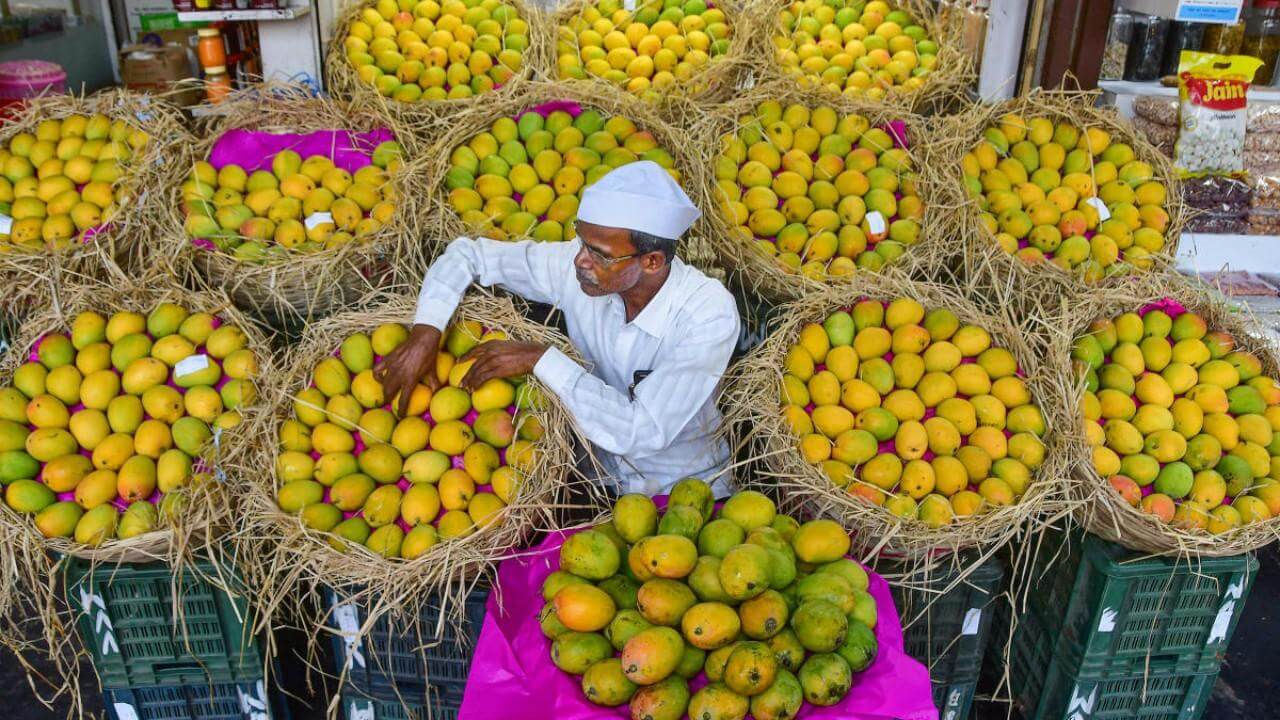
The Mankurad is the first premium mango to arrive each season — a quality that Goans celebrate with genuine anticipation. When the first dozen Mankurads appear in Panaji or Margao market, it signals that summer has truly arrived.
Period
Availability
Notes
January – February
Very limited; 2–3 vendors only
First fruits of the season; extremely expensive; collectors only
March
Limited; prices peak
Season opens properly; still scarce; ₹5,000–₹7,000/dozen at peak
April (early)
Increasing
More trees yielding; prices start to ease
April (peak)
Peak season
Best balance of quality and availability; ₹1,500–₹2,000/dozen
May
Full availability
Most abundant period; ₹800–₹1,500/dozen; quality still excellent
June
Season ends
Rains begin; season close; very limited late fruit
Best buying window: April 15 – May 15. Optimal balance of quality, availability, and price. Early-season Mankurad (January–March) is extraordinary but comes at extraordinary prices. See the mango season calendar.
MANKURAD MANGO PRICE
Price Guide (2025–26 Season Data from Goa Markets)
Period
Price per Dozen
Notes
January–February (very early)
₹5,000 – ₹7,000
Extreme scarcity premium; only 2–3 vendors in Panaji market
March
₹3,000 – ₹5,500
Season opening; weather-dependent
April (early)
₹1,500 – ₹2,000
Mid-season; A-grade large fruits
April–May (peak)
₹800 – ₹1,500
Peak supply; best value
May (late)
₹600 – ₹1,000
Season winding down
Wholesale price (Mapusa market, peak season): approximately ₹55/kg.
Mankurad consistently commands 2–3× the price of Alphonso at Goa's local markets during the same window — a reversal of the national pecking order that surprises most visitors.
MANKURAD IN GOA'S KITCHEN
How Goans Have Eaten Mankurad for Generations
The Mankurad is not just a table fruit in Goa — it anchors an entire culinary tradition that stretches from fresh eating to monsoon preservation.
Mangad (Mango Jam)
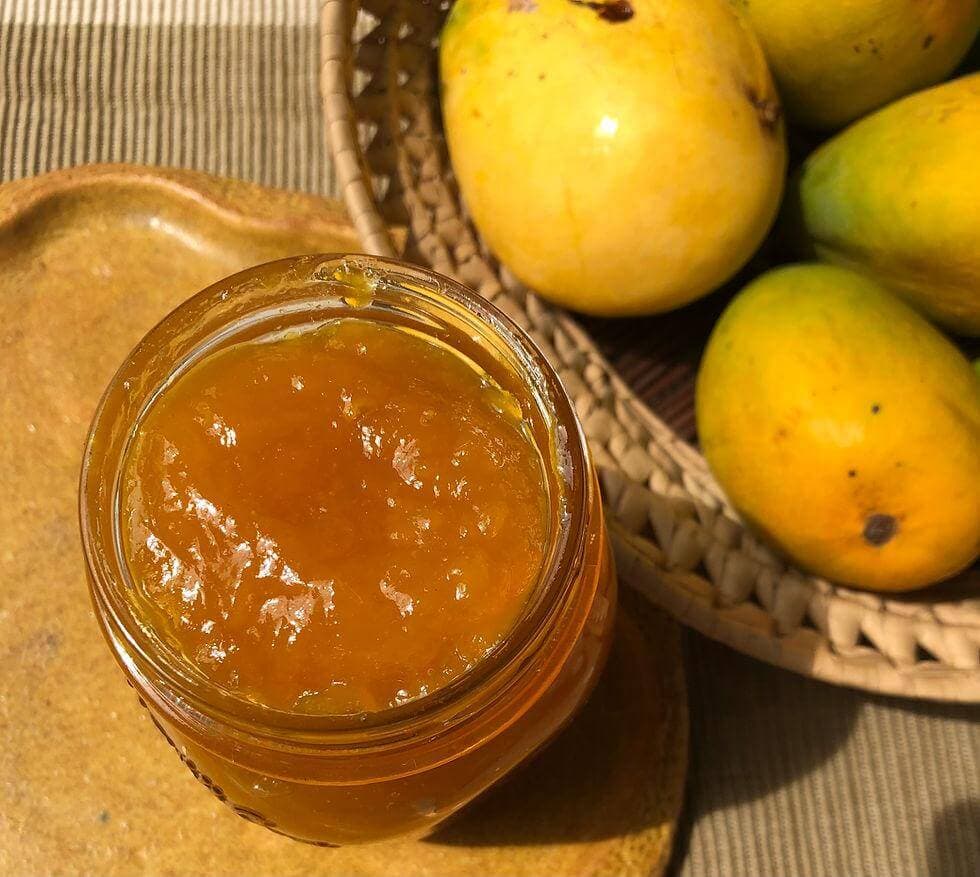
Goan grandmothers cook early-season Mankurads into mangad — a thick, golden, intensely fragrant jam. Made with minimal sugar because the fruit barely needs it, mangad stretches the Mankurad's flavour through the monsoon months and beyond. A jar of mangad in a Goan kitchen is the summer captured in glass.
Chepnechim Toran (Raw Mango Pickle)
Made with slightly raw or semi-ripe Mankurads, pickled in chilli, ginger, and cashew — a recipe that captures the tartness of the early fruit and the warmth of Goan spice. Unlike North Indian achar, this is fresh, not oil-cured, and eaten within weeks.
Fresh Eating (Ras)
The most popular use. Chilled, sliced, served at the table — the Mankurad's extraordinary aroma fills the room before anyone touches the fruit. Goan families will tell you the first Mankurad of the season is a ritual, not a snack.
COMPARISON
Mankurad vs Alphonso — A Question Goans Find Obvious
Mankurad
Alphonso
Origin
Goa
Ratnagiri & Devgad, Maharashtra
Skin colour
Calm, even golden-yellow
Golden-yellow with dramatic orange-red blush
Flesh texture
Smooth with some fibre near stone
Near-zero fibre throughout
Taste
Honey, caramel, cinnamon, allspice
Rich saffron-sweet with complex acid balance
Aroma
Extremely powerful; fills a room
Intense, floral
Sugar content (Brix)
~21%
17–23%
Season
January – May (first to arrive)
March – May
Availability outside origin
Extremely limited
Widely available online and in markets
Price (peak season/dozen)
₹800 – ₹2,000
₹800 – ₹1,800
Export
First export: UK, May 2024
Long-established export to UK, US, Middle East
WHERE IS MANKURAD GROWN?
Almost Entirely Confined to Goa's Coastal Belt
Unlike most premium Indian mango varieties that grow across multiple states, the Mankurad is almost entirely confined to Goa — and specifically to its coastal belt. See our full variety guide and sourcing regions.
Primary region
North Goa — Mapusa, Panaji, Siolim, Bardez taluka
Secondary growing areas
Salcete taluka (South Goa), Mormugao
Very limited cultivation
Vengurla and Malvan talukas of coastal Maharashtra; Uttara Kannada district of Karnataka — authentic Mankurad is exclusive to Goa
HOW TO BUY MANKURAD MANGO ONLINE
How to Buy Mankurad Mango Online
The Mankurad's rarity and delicacy make it one of the hardest premium Indian mangoes to buy outside Goa. Unlike Alphonso — which ships easily from Ratnagiri — the Mankurad is more fragile, more geographically concentrated, and produced in far smaller quantities.
What makes it hard to find online
- Most Mankurad is consumed within Goa or sold at Goa's local markets
- The fruit is delicate and doesn't travel as well as Alphonso without careful packing
- The season's early months (Jan–March) produce so few fruits that most are sold door-to-door or at specific Goa market stalls
- Commercial scale packing and shipping infrastructure for Mankurad outside Goa is still developing
At MangoShop.in: We source Mankurad directly from verified orchard families in North Goa during April–May when supply is sufficient to guarantee quality through transit. We do not ship early-season Mankurad (January–March) — the fruit at that point is too scarce and too delicate for reliable delivery outside Goa.
Frequently Asked Questions
Mankurad — Goa's Most Prized Mango, Delivered Across India
Available April–May only. Sourced from verified orchard families in North Goa. Limited quantity each season.